

In manufacturing businesses, machines are the backbone of production. When equipment runs smoothly, businesses can produce more products in less time and maintain consistent quality. However, when machines stop frequently, run slower than expected, or produce defective items, productivity drops and operational costs increase.
This is where OEE Efficiency becomes extremely valuable. It helps organizations measure how effectively their machines and equipment are performing during production time.
For many Indian MSMEs and manufacturing units, understanding OEE Efficiency can provide clear insights into operational performance and help identify areas where improvements are needed.
What is OEE?
Overall Equipment Effectiveness (OEE) is a widely used method in manufacturing that measures how well machines are utilized during production.
In simple terms, OEE Efficiency shows how much of the total production time is actually productive. Instead of simply assuming machines are performing well, businesses can use this metric to get a clear and realistic picture of their operations.
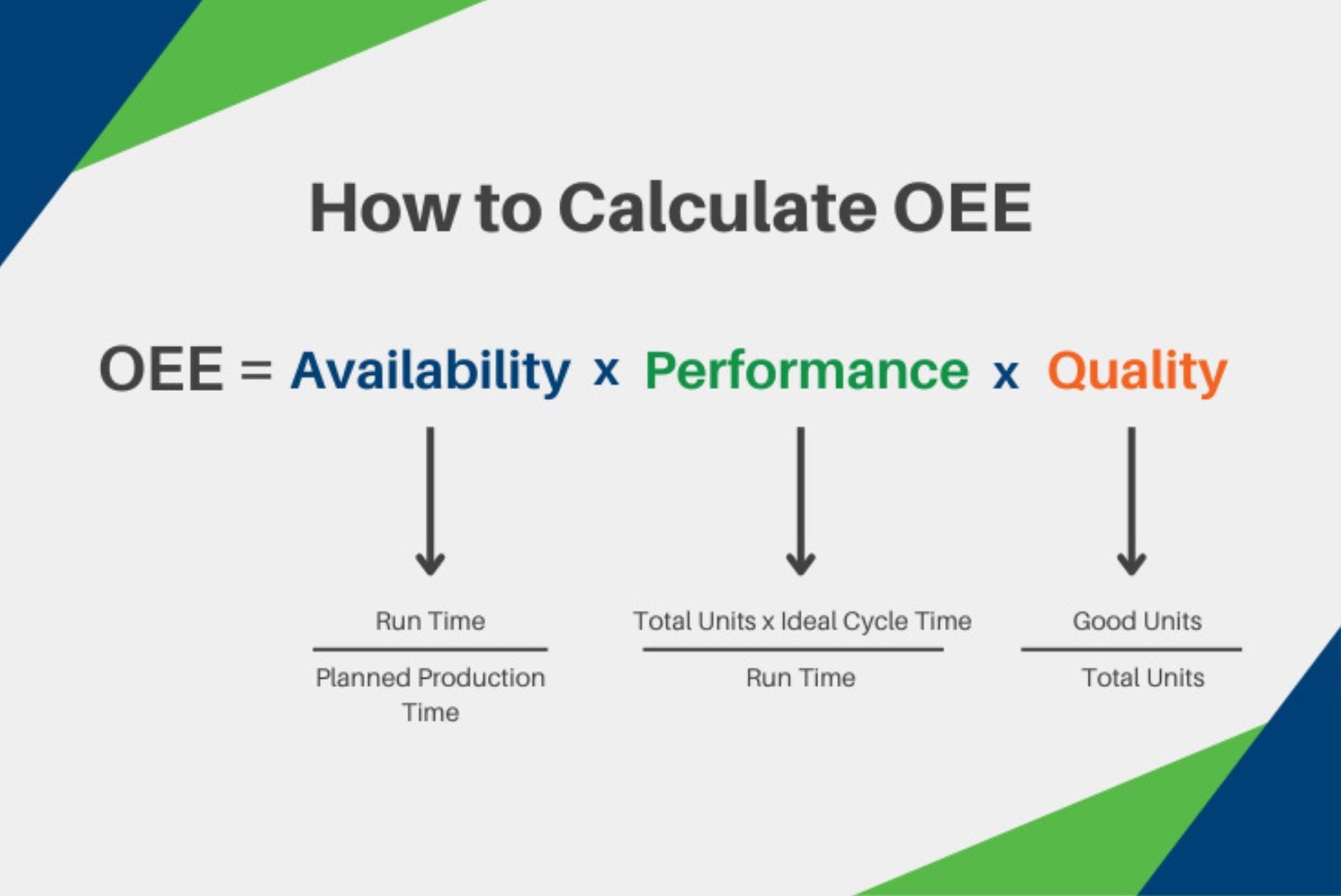
OEE is calculated using three key performance factors:
- Availability – Whether the machine is running when it is planned to run
- Performance – Whether the machine is operating at its maximum possible speed
- Quality – Whether the products produced meet required quality standards
When these three factors are combined, they give a clear measure of OEE Efficiency, allowing managers to evaluate the real productivity of their equipment.
Why OEE Matters for Manufacturing Businesses
Many companies believe their production systems are efficient because machines are running and products are being made. However, hidden losses often reduce the overall productivity of the factory.
Monitoring OEE Efficiency helps businesses identify these hidden losses and understand the actual performance of their equipment.
Some important advantages include:
- Detecting machine downtime and production interruptions
- Improving equipment utilization
- Reducing defective products and material wastage
- Increasing output without investing in new machinery
- Supporting better maintenance planning and scheduling
By regularly measuring OEE Efficiency, business owners and managers can take informed decisions that lead to better operational performance.
Identifying Production Losses with OEE
One of the main strengths of OEE Efficiency is its ability to highlight the specific reasons behind production losses.
For example, if machines frequently stop due to minor issues or breakdowns, the availability factor decreases. If equipment runs slower than its designed speed, the performance factor is affected. Similarly, if defective items are produced, the quality factor drops.
When organizations monitor OEE Efficiency, they can quickly identify which of these areas is causing the most problems. This allows teams to take targeted corrective actions instead of relying on assumptions.
As a result, companies can improve production stability and reduce unnecessary disruptions.
Supporting Continuous Improvement
In today’s competitive manufacturing environment, continuous improvement has become essential for long-term success. Businesses must constantly look for ways to improve productivity and reduce operational inefficiencies.
Tracking OEE Efficiency encourages companies to regularly review their processes and identify opportunities for improvement. It also promotes a culture where employees become more aware of machine performance and operational efficiency.
When production teams monitor performance data and work together to solve problems, overall productivity improves significantly.
Practical Steps to Improve OEE
Improving OEE Efficiency does not always require expensive technology or major investments. In many cases, small operational improvements can deliver significant results.
Businesses can start with simple actions such as:
- Conducting regular preventive maintenance to avoid unexpected breakdowns
- Reducing machine setup and changeover time
- Providing proper training for machine operators
- Tracking downtime and analyzing its root causes
- Improving production planning and scheduling
By consistently focusing on these areas, organizations can gradually increase their OEE Efficiency and achieve better production results.
Conclusion
Manufacturing businesses today face strong competition and increasing pressure to improve productivity. Companies that clearly understand how their machines perform have a strong advantage in managing their operations effectively.
By measuring and improving OEE Efficiency, organizations can reduce downtime, improve product quality, and maximize the output of their existing equipment. Over time, this leads to better operational performance and stronger profitability.
For Indian manufacturing companies aiming to grow in a competitive market, focusing on OEE Efficiency can be a practical and powerful step toward sustainable business success.
Image Credits: Certainty
For more articles on startup growth, fundraising strategies, and business insights for Indian founders,
visit: Udyamee India Magazine