

Why Many Businesses Struggle With Quality
Many businesses work hard every day, yet problems continue to appear. Orders get delayed, products have defects, and customers complain about inconsistent service.
Often the real problem is not effort but process quality. Many companies run operations without clear systems to detect and solve recurring issues.
This is where Six Sigma becomes valuable. Six Sigma is a structured method used to improve quality by identifying problems, reducing errors, and making processes more reliable.
Instead of guessing what is wrong, Six Sigma focuses on using data and structured thinking to find the real cause of problems.
What Is Six Sigma?
Six Sigma is a quality improvement approach designed to reduce defects and improve consistency in business processes.
The concept may sound technical, but the idea is simple. Businesses study how work actually happens, identify where mistakes occur, and improve the process step by step.
When applied properly, this method helps organizations deliver better products, faster services, and more consistent customer experiences.
The Core Idea Behind Process Improvement
In many organizations, the same task produces different results every time. For example:
- Products sometimes fail quality checks
- Delivery timelines vary unexpectedly
- Customer service responses are inconsistent
These variations create confusion and waste resources.
Six Sigma focuses on making processes stable and predictable. When processes become consistent, businesses reduce waste, improve efficiency, and build stronger customer trust.
Because of these benefits, many organizations around the world rely on Six Sigma to strengthen their operations.
The Five Key Steps for Process Improvement
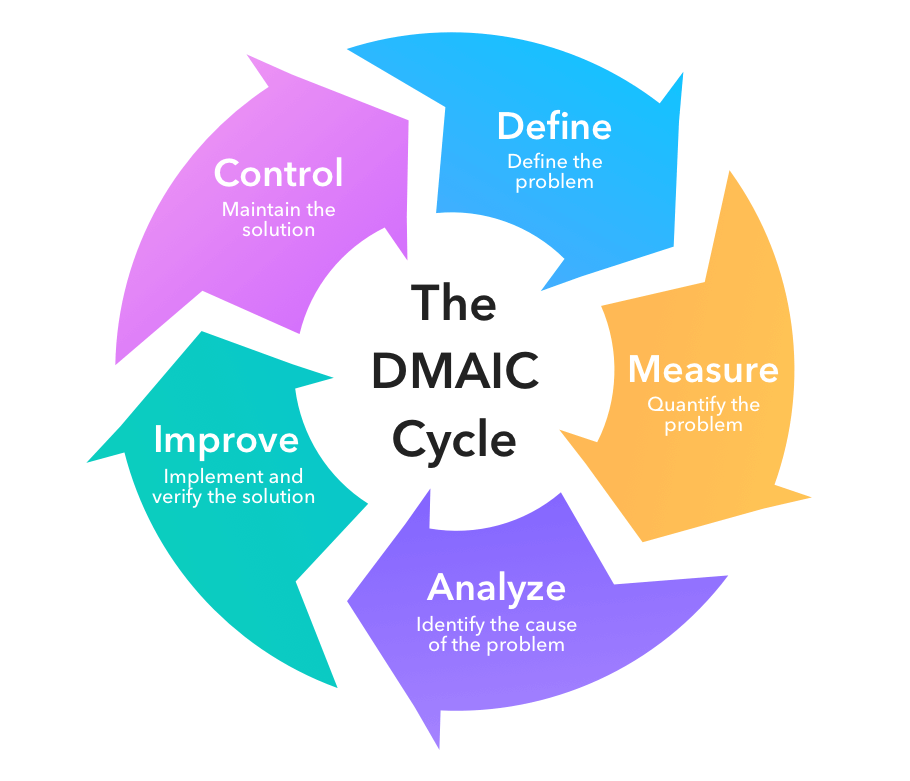
Most improvement initiatives follow a structured framework known as DMAIC, widely used in Six Sigma projects.
1. Define
The first step is clearly defining the problem and the goal of improvement.
For example:
- Reduce product defects
- Improve delivery time
- Decrease customer complaints
Clear problem definition prevents confusion later.
2. Measure
Next, businesses collect data about how the process currently works.
This may include measuring production time, tracking errors, or analyzing service performance.
Data helps teams understand the real situation instead of relying on assumptions.
3. Analyze
During this stage, teams examine the collected data to identify the root cause of the problem.
Many times, the issue is not employee performance but weaknesses in the process itself. This analytical thinking is a key strength of Six Sigma.
4. Improve
Once the root cause is identified, targeted improvements are introduced.
Examples include:
- Simplifying workflow steps
- Improving coordination between teams
- Updating outdated procedures
- Using better tools or systems
These improvements are tested before full implementation.
5. Control
After improvements are made, organizations monitor the process to ensure that the problem does not return.
Performance indicators, regular reviews, and clear procedures help maintain stability. This step ensures Six Sigma improvements continue delivering results over time.
Benefits for Growing Businesses
Organizations that adopt Six Sigma often experience several benefits:
- Better product and service quality
- Lower operational costs
- Fewer errors and defects
- Higher efficiency in daily operations
- Stronger customer satisfaction
More importantly, the approach encourages teams to focus on continuous improvement rather than temporary fixes.
Conclusion
In today’s competitive market, businesses must maintain consistent quality and efficiency to stay ahead. Customers expect reliable products and services, and companies that fail to deliver often lose trust and opportunities.
Six Sigma offers a structured way to improve processes, reduce errors, and strengthen operational performance. By focusing on data and root causes, businesses can solve problems more effectively instead of repeatedly fixing the same issues.
When organizations apply Six Sigma with discipline and commitment, they create stronger systems, better customer experiences, and a foundation for long-term business success.
Image Credits: Infinity
For more articles on startup growth, fundraising strategies, and business insights for Indian founders,
visit: Udyamee India Magazine