

A practical guide for business owners to improve workplace organization, reduce waste, and increase productivity using 5S Analysis.
Introduction
In many growing businesses, productivity problems are not caused by lack of effort. The real issue is often poor workplace organization. Tools are misplaced, materials are difficult to find, and employees spend valuable time searching instead of working.
A structured approach can solve this challenge. 5S Analysis provides a simple framework that helps organizations organize their work environment, remove unnecessary items, and create a disciplined system.
For Indian MSMEs and growing companies, adopting 5S Analysis can significantly improve operational efficiency without large investments.
What Is 5S Analysis?
5S Analysis is a workplace organization method that focuses on creating a clean, efficient, and systematic work environment.
The concept originated from Japanese management practices and has been widely used in manufacturing, logistics, and service industries. The purpose is simple: ensure that every tool, material, and process has a clear place and structure.
When workplaces are organized, employees can work faster, make fewer mistakes, and focus more on productivity rather than searching for resources.
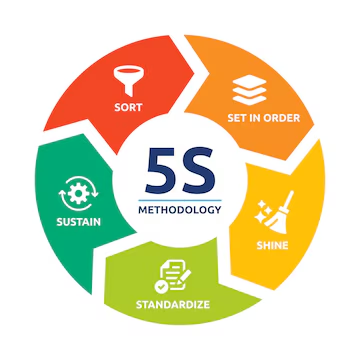
The Five Principles of 5S Analysis
The effectiveness of 5S Analysis comes from its structured five-step method that improves discipline in daily operations.
1. Sort
The first step focuses on identifying and removing unnecessary items from the workplace.
Over time, work areas accumulate unused tools, excess materials, outdated files, and damaged equipment. These items create clutter and reduce efficiency.
Sorting helps businesses separate what is required from what is not. Removing unnecessary items creates more space and clarity.
2. Set in Order
After sorting, the next step is arranging the necessary items in a systematic way.
Tools, equipment, and materials should have fixed locations so employees can access them quickly. Clear labeling, visual markings, and storage systems make the workplace easier to navigate.
A well-arranged workplace reduces delays and improves workflow.
3. Shine
Cleanliness is the third step of the system.
Regular cleaning ensures that machines, workstations, and floors remain in good condition. A clean environment also helps identify issues early, such as oil leaks, worn-out parts, or safety hazards.
Maintaining cleanliness improves both safety and equipment reliability.
4. Standardize
Once sorting, organizing, and cleaning are completed, organizations must establish clear standards to maintain these improvements.
Standard procedures, checklists, and visual instructions help employees follow the same practices consistently.
This step ensures that workplace improvements are not temporary but become part of everyday operations.
5. Sustain
The final stage focuses on maintaining discipline and consistency.
Without regular monitoring, workplaces may gradually return to previous habits. Leaders must encourage teams to maintain organization and follow the defined standards.
When discipline becomes a routine habit, 5S Analysis delivers long-term operational benefits.
Benefits for Growing Businesses
Businesses that adopt 5S Analysis often experience noticeable improvements within a short time.
One major benefit is improved productivity. Employees spend less time searching for tools or materials, allowing them to focus more on productive work.
Another advantage is improved safety. Organized workplaces reduce accidents caused by clutter, misplaced equipment, or blocked pathways.
Quality also improves because employees work in a structured and controlled environment.
For growing companies, these improvements create a strong operational foundation.
Why MSMEs Should Implement It
Many MSMEs rely on informal processes and personal supervision. While this may work in the early stages, it becomes difficult to manage as the organization grows.
Implementing 5S Analysis helps businesses introduce discipline without complex systems or expensive technology.
Manufacturing units, warehouses, workshops, and even office environments can benefit from this method. Organized workplaces reduce confusion and improve team efficiency.
Several businesses highlighted in Udyamee India Magazine emphasize workplace organization as a key step toward operational excellence.
Leadership Role in Implementation
Successful implementation requires leadership commitment.
Managers and business owners should actively participate in workplace improvement efforts. Regular inspections, employee participation, and recognition of disciplined teams encourage long-term success.
When leaders support the initiative and employees take responsibility, 5S Analysis becomes part of organizational culture rather than just a temporary project.
Conclusion
Operational efficiency is essential for long-term business growth. Small improvements in workplace organization can create significant productivity gains.
5S Analysis offers a practical, structured approach to achieving this goal. By removing clutter, organizing resources, maintaining cleanliness, and building disciplined habits, businesses can improve efficiency, safety, and quality simultaneously.
For Indian entrepreneurs and MSMEs, 5S Analysis is a simple yet powerful step toward building a more organized and productive workplace.
Image Credits: Freepik
For more articles on startup growth, fundraising strategies, and business insights for Indian founders,
visit: Udyamee India Magazine