

What Is a Pareto Chart?
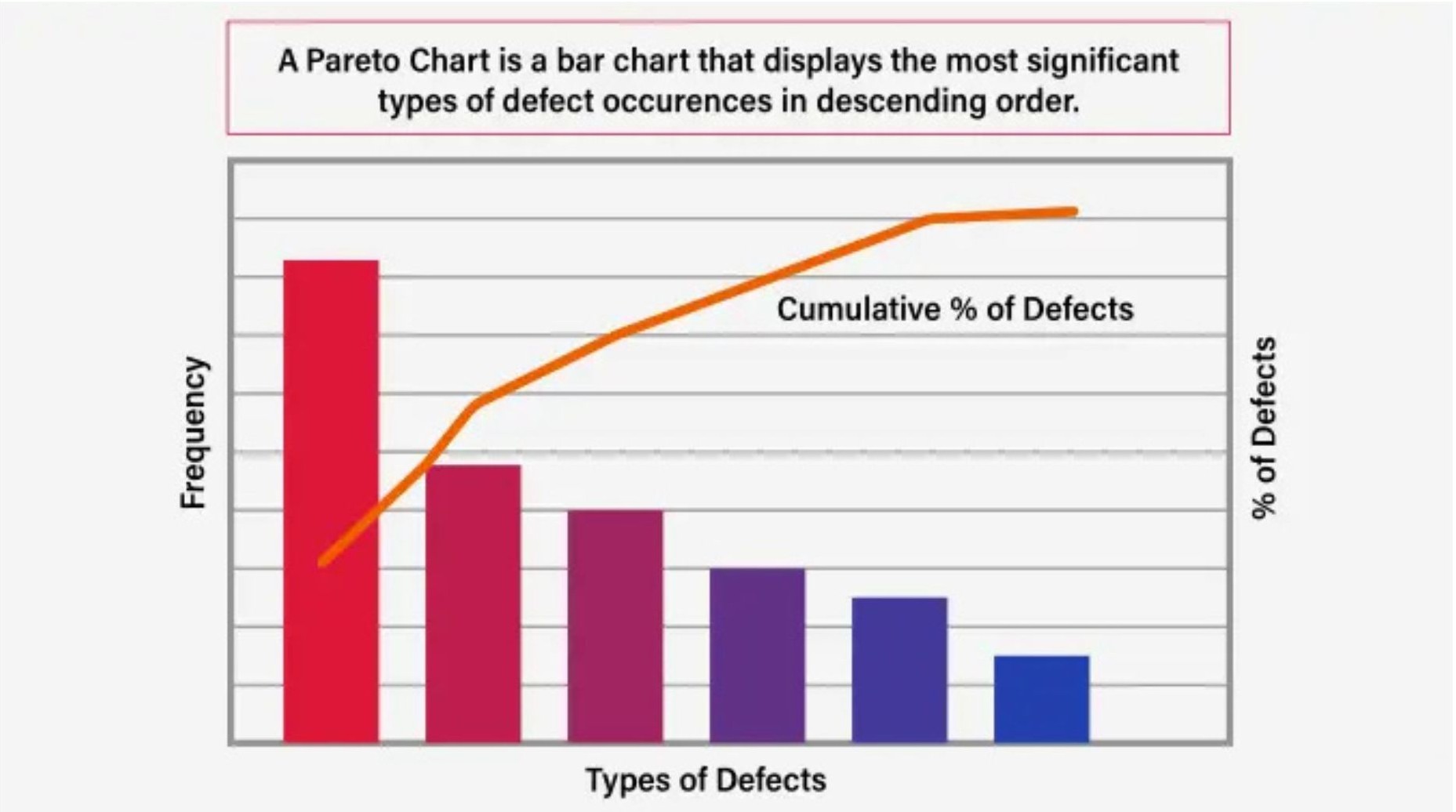
A Pareto Chart is a visual prioritization tool based on the 80/20 principle. The idea is simple: roughly 80% of results often come from 20% of causes.
It displays problems in descending order of frequency or impact using bars, along with a cumulative percentage line. This visual format makes it immediately clear which issues contribute the most.
By looking at a Pareto Chart, management can quickly identify where action will produce the greatest improvement.
Why Businesses Struggle Without Prioritization
Many companies collect data but fail to use it effectively. They track complaints, defects, delays, and expenses, but struggle to decide where to act first.
Without structured prioritization:
- Teams spread efforts too thin
- Small issues consume major time
- High-impact problems remain unresolved
- Resources are misallocated
A Pareto Chart brings discipline to decision-making. It turns raw data into strategic insight.
For businesses with limited manpower and tight budgets, focusing on the right issues can make the difference between stagnation and growth.
How the Method Works
Creating a Pareto Chart involves a few simple steps:
- List categories of problems
- Collect data on frequency or cost
- Arrange them from highest to lowest
- Create a bar graph
- Add a cumulative percentage line
Once prepared, the chart visually highlights which small group of causes creates the majority of the problem.
This clarity reduces emotional debates during meetings. Decisions become data-driven instead of opinion-driven.
Real Example for Indian MSMEs
Imagine a small manufacturing company facing recurring production issues:
- Machine breakdown
- Raw material defects
- Operator errors
- Power interruptions
- Maintenance delays
After tracking incidents for three months, the company prepares a Pareto Chart.
The analysis reveals that machine breakdown and raw material defects account for nearly 75% of production loss.
Instead of addressing all five areas simultaneously, management concentrates on preventive maintenance and supplier quality control.
The Pareto Chart directs attention to the areas that deliver maximum return on effort.
Benefits for Growing Businesses
When used properly, a Pareto Chart offers:
- Clear prioritization of critical issues
- Faster problem resolution
- Better resource allocation
- Reduced operational waste
- Improved management focus
For leaders, it reduces confusion and supports confident decision-making.
For teams, it provides direction and measurable improvement targets.
For customers, it improves consistency and service quality.
Applications Beyond Quality Control
A Pareto Chart is not limited to production or defect analysis. It can be applied across multiple business functions:
- Sales revenue distribution
- Customer complaint analysis
- Cost breakdown evaluation
- Inventory loss tracking
- Supplier performance review
For example, a retail business may discover that a small percentage of products generate most of the revenue. A service company may find that a few recurring issues drive the majority of complaints.
In each case, the insight enables focused action.
Common Mistakes to Avoid
Even though the tool is simple, mistakes can reduce its effectiveness:
- Using inaccurate or incomplete data
- Ignoring low-frequency but high-risk issues
- Preparing the chart once and not reviewing it regularly
- Failing to take corrective action after analysis
A Pareto Chart should support continuous improvement. Regular updates ensure that priorities reflect current business realities.
It is not a one-time report, it is a strategic management aid.
Strategic Importance for Leaders
Strong strategy begins with understanding impact.
Leaders who use a Pareto Chart regularly develop sharper analytical thinking. They learn to ask:
- Which problems truly matter?
- Where will improvement bring the highest return?
- What should we solve first?
This structured mindset strengthens planning and long-term sustainability.
Instead of firefighting daily issues, management begins focusing on root causes and performance drivers.
Conclusion
In a competitive business environment, clarity is power.
A Pareto Chart provides that clarity by revealing the few factors responsible for major outcomes. It transforms scattered data into actionable insight.
For Indian business owners aiming for stable growth and better profitability, structured prioritization is essential.
When leaders focus on what truly matters, improvement becomes faster, smarter, and more sustainable.
Image Credits: SprintZeal
For more articles on startup growth, fundraising strategies, and business insights for Indian founders,
visit: Udyamee India Magazine