

Competition isn’t just about rivals. Porter’s Five Forces reveals the hidden industry pressures so you can protect profits and grow strategically.
What Is Porter’s Five Forces?
Porter’s Five Forces is a strategic model developed to analyze industry competition in a structured way.
Instead of looking at competition narrowly, this framework studies five different forces that influence profitability. It gives business owners a broader and more practical understanding of how markets operate.
For Indian MSMEs and growing companies, structured analysis reduces risky decision-making.
Why Porter’s Five Forces Matters for Business Growth
Markets today are more competitive than ever.
Whether you operate in manufacturing, retail, services, or technology, multiple forces influence pricing and stability. This framework helps leaders move from guesswork to structured evaluation.
By applying this model, businesses can:
- Identify hidden risks
- Improve negotiation strategies
- Plan defensive actions
- Strengthen long-term positioning
It encourages proactive thinking instead of reactive responses.
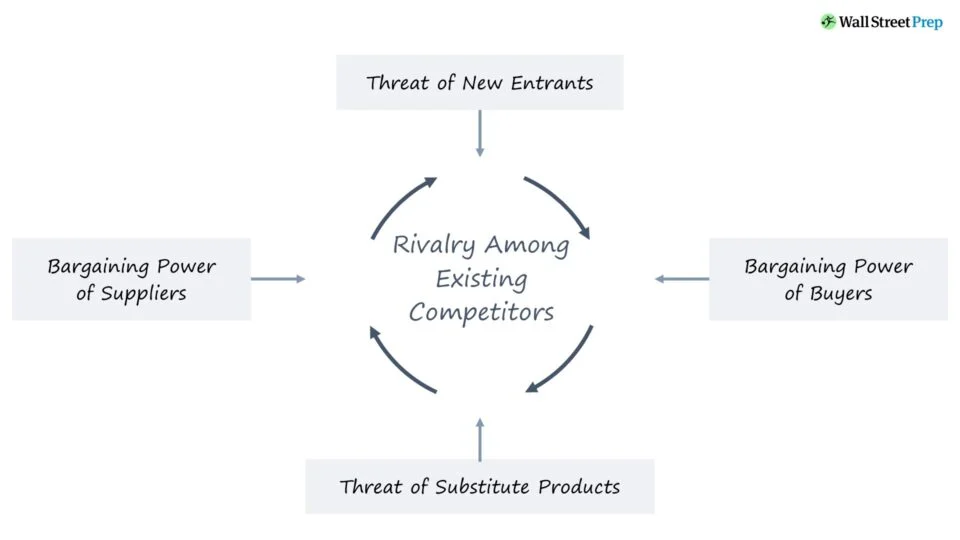
The Five Elements of Porter’s Five Forces
Let’s understand the five forces in simple language.
1. Competitive Rivalry in Porter’s Five Forces
This refers to competition among existing players.
If many businesses offer similar products, price wars become common. High rivalry reduces profit margins and increases marketing costs.
This framework helps leaders measure how intense the competition truly is.
2. Threat of New Entrants in Porter’s Five Forces
When entry barriers are low, new businesses can enter easily.
Low investment requirements, minimal regulations, or easy access to suppliers increase this threat.
Through this model, companies assess whether their market position is protected or vulnerable.
3. Supplier Power in Porter’s Five Forces
Suppliers influence costs and quality.
If a company depends on a limited number of suppliers, those suppliers gain bargaining power.
This framework encourages businesses to reduce dependency and strengthen supply stability.
4. Buyer Power in Porter’s Five Forces
Customers can influence pricing and service expectations.
If buyers have many alternatives, they demand better prices and higher quality.
This model helps businesses evaluate how strong customer influence is and where differentiation is needed.
5. Threat of Substitutes in Porter’s Five Forces
Substitutes are alternative products that meet the same need.
For example, digital services replacing traditional services.
This framework reminds leaders to look beyond direct competitors and monitor alternative solutions in the market.
Practical Example for Indian Businesses
Imagine a small packaging manufacturer.
Using this model, the owner evaluates:
- High competition in the local market
- Easy entry for small units
- Strong supplier control over raw material prices
- Buyers demanding lower margins
- Alternative packaging materials available
By analyzing these pressures clearly, the company can improve pricing strategy and invest in differentiation.
Without structured thinking, decisions may be based only on short-term reactions.
Benefits of Using Porter’s Five Forces
When applied correctly, Porter’s Five Forces provides:
- Clear understanding of industry structure
- Better pricing strategies
- Stronger negotiation power
- Improved expansion planning
- Reduced strategic risk
It builds long-term competitive awareness.
For MSMEs planning growth, this clarity supports smarter investment decisions.
When Should You Use Porters Five Forces?
Porter’s Five Forces is especially useful when:
- Entering a new market
- Launching a new product
- Reviewing pricing strategy
- Planning expansion
- Conducting annual strategy meetings
Regular review ensures that leaders stay aware of changing industry conditions.
Markets evolve. Customer expectations shift. Technology disrupts.
Structured analysis keeps businesses prepared.
Conclusion
Porter’s Five Forces remains one of the most powerful tools for understanding industry competition.
Instead of focusing only on visible rivals, this framework reveals the deeper pressures that shape profitability.
For Indian business owners, strategic clarity reduces uncertainty and improves confidence in decision-making.
When you understand your industry structure fully, you compete smarter — not harder.
Image Credits: WallStreetPrep
For more articles on startup growth, fundraising strategies, and business insights for Indian founders,
visit: Udyamee India Magazine