

A practical guide to understanding how the Turtle Diagram helps businesses clearly define processes, improve accountability, and strengthen quality systems.
What Is It?
Clear processes create strong businesses. When systems are not clearly defined, confusion, delays, and repeated mistakes become normal. Many growing companies struggle not because of lack of effort, but because their processes are unclear.
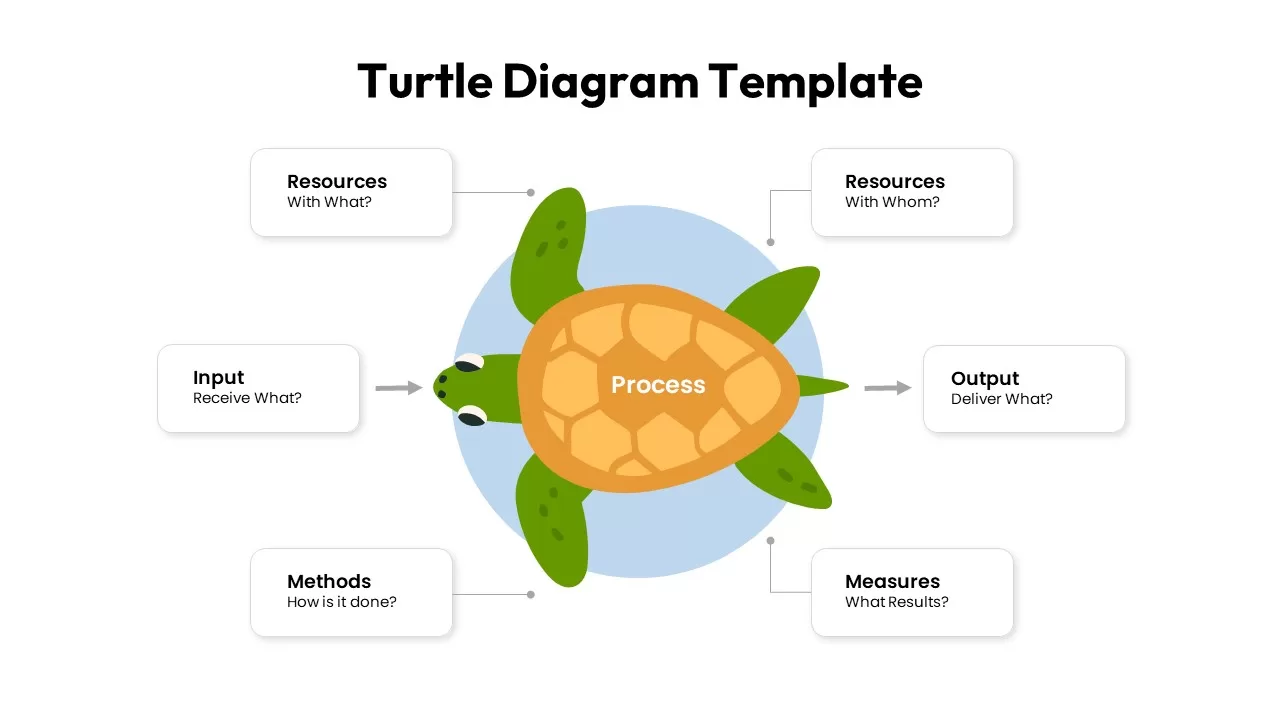
One practical solution is the Turtle Diagram. It is a simple visual framework that helps organizations understand how a process works and what supports it.
A Turtle Diagram places the main process at the center and connects it with important supporting elements around it. Instead of long documentation, everything is visible on one structured page.
For local Indian businesses and MSMEs, this visual clarity makes management easier and more effective.
Why Process Clarity Is Important
In many companies, employees perform tasks based on experience rather than structure. Over time, this creates inconsistencies.
Common issues include:
- Undefined responsibilities
- Missing inputs
- Unclear outputs
- No performance measurement
Without structure, accountability becomes weak.
A Turtle Diagram forces management to clearly define how work flows from start to finish. It encourages disciplined thinking and structured discussion.
When leaders map a process visually, gaps become easier to identify and correct.
Key Elements of This Framework
This structured method focuses on six critical components of any process:
- The main activity
- Inputs required
- Outputs produced
- People responsible
- Resources used
- Performance indicators
By documenting these elements in one layout, the Turtle Diagram creates transparency.
Employees understand what is expected. Managers understand how performance is evaluated. Auditors understand how control is maintained.
This alignment reduces misunderstandings and improves coordination.
Practical Example: Purchase Process
Consider a small manufacturing business managing procurement.
Using a Turtle Diagram, management defines:
- Inputs: Approved purchase request
- Outputs: Raw materials received
- Responsible: Purchase executive
- Resources: Vendor list and accounting software
- Measurement: Delivery time and quality inspection
When this structure is clearly defined, delays and supplier errors reduce.
A Turtle Diagram makes it easy to see where corrective action is required. Instead of blaming individuals, the focus shifts to improving the process.
Benefits for Growing Businesses
When implemented properly, a Turtle Diagram provides several advantages:
- Clear process visibility
- Stronger accountability
- Better performance tracking
- Easier training of new employees
- Improved audit readiness
It also reduces dependency on verbal instructions, which often create inconsistency.
For MSMEs aiming to scale operations, structured systems are essential. A Turtle Diagram supports that transition from informal working to disciplined management.
Role in ISO and Quality Systems
Organizations following ISO standards must define and monitor their processes.
A Turtle Diagram supports:
- Process mapping
- Risk-based thinking
- Control identification
- Internal audits
Instead of complex manuals, this framework offers a clear and visual explanation of how activities are managed.
During audits, presenting a Turtle Diagram demonstrates structured thinking and operational control.
When Should You Use It?
This method is especially useful when:
- Designing a new process
- Preparing for ISO certification
- Investigating repeated operational issues
- Conducting internal reviews
- Training team members
A Turtle Diagram works effectively in manufacturing, services, logistics, administration, and even HR functions.
It is flexible and can be adapted to different industries.
Common Mistakes to Avoid
Some organizations reduce effectiveness by:
- Overcomplicating the layout
- Ignoring performance metrics
- Failing to update it after changes
- Treating it as paperwork only
A Turtle Diagram must reflect actual operations. It should be reviewed periodically to ensure relevance.
Simplicity and accuracy are key.
Conclusion
The Turtle Diagram is a practical and powerful tool for improving clarity in business processes.
In growing companies, unclear systems often cause repeated mistakes and inefficiencies. A Turtle Diagram brings discipline by clearly defining responsibilities, resources, inputs, outputs, and measurement criteria.
It strengthens operational control without adding unnecessary complexity.
Businesses that adopt structured process thinking build stronger foundations for long-term success.
Clarity leads to consistency. Consistency leads to growth.
Image Credits: SlideBazaar
For more articles on startup growth, fundraising strategies, and business insights for Indian founders,
visit: Udyamee India Magazine