

Close Menu
udyamee
  • Home
  • Growth
    • Strategy
    • Leadership
    • Marketing
    • Operations
    • Sales
  • Innovation
    • Tech
    • AI
    • Automation
    • Digital tools
  • Startups
    • Funding
    • Planning
    • Branding
    • Success stories
  • Finance
    • Money
    • Investors
    • Tax
    • Planning
  • Events
    • Awards
    • Summits
    • Networking
  • Spotlight
    • Featured founder
    • Influencer
    • Brand
  • HR & People
    • Hiring
    • Culture
    • Productivity
    • Workplace
  • Udyamee Initiative
    • Udyamee Business Council
    • Udyamee Awards
  • My Account
What's Hot

Just-in-Time (JIT): The Smart Inventory Strategy That Reduces Waste and Increases Profit

February 20, 2026

Six Thinking Hats: The Powerful Thinking Method That Transforms Business Decision-Making

February 19, 2026

Fishbone Diagram: Stop Guessing and Finally See What’s Really Causing Your Problems

February 18, 2026
Facebook X (Twitter) Instagram Threads
Trending
  • Just-in-Time (JIT): The Smart Inventory Strategy That Reduces Waste and Increases Profit
  • Six Thinking Hats: The Powerful Thinking Method That Transforms Business Decision-Making
  • Fishbone Diagram: Stop Guessing and Finally See What’s Really Causing Your Problems
  • Five Whys Analysis: The Proven Secret That Finally Stops Your Business Problems for Good
  • Root Cause Solutions: Stop Wasting Time on Problems That Keep Coming Back
  • FMEA: The Risk Tool That Stops Problems Before They Cost You Money
  • Process Clarity Unlocked: The Simple Tool That Transforms How Your Business Works
  • Kaizen: Small Steps, Big Results, how Continuous Improvement Transforms Your Business
udyamee
My Account
  • Home
  • Growth
    • Strategy
    • Leadership
    • Marketing
    • Operations
    • Sales
  • Innovation
    • Tech
    • AI
    • Automation
    • Digital tools
  • Startups
    • Funding
    • Branding
    • Success stories
  • Finance
    • Money
    • Investors
    • Tax
    • Planning
  • Events
    • Awards
    • Summits
    • Networking
  • Spotlight
    • Featured founder
    • Influencer
    • Brand
  • HR & People
    • Hiring
    • Productivity
    • Workplace
  • Udyamee Initiative
    • Udyamee Business Council
    • Udyamee Awards
udyamee
Home»Growth»Operations»Fishbone Diagram: Stop Guessing and Finally See What’s Really Causing Your Problems
Operations

Fishbone Diagram: Stop Guessing and Finally See What’s Really Causing Your Problems

Udyamee IndiaBy Udyamee IndiaFebruary 18, 20264 Mins Read
Fishbone Diagram
Share
Facebook Twitter Pinterest Copy Link LinkedIn WhatsApp

Why random fixes waste time and money, and how smart Indian businesses use the Fishbone Diagram to identify every possible cause before taking action.


What Is a Fishbone Diagram?

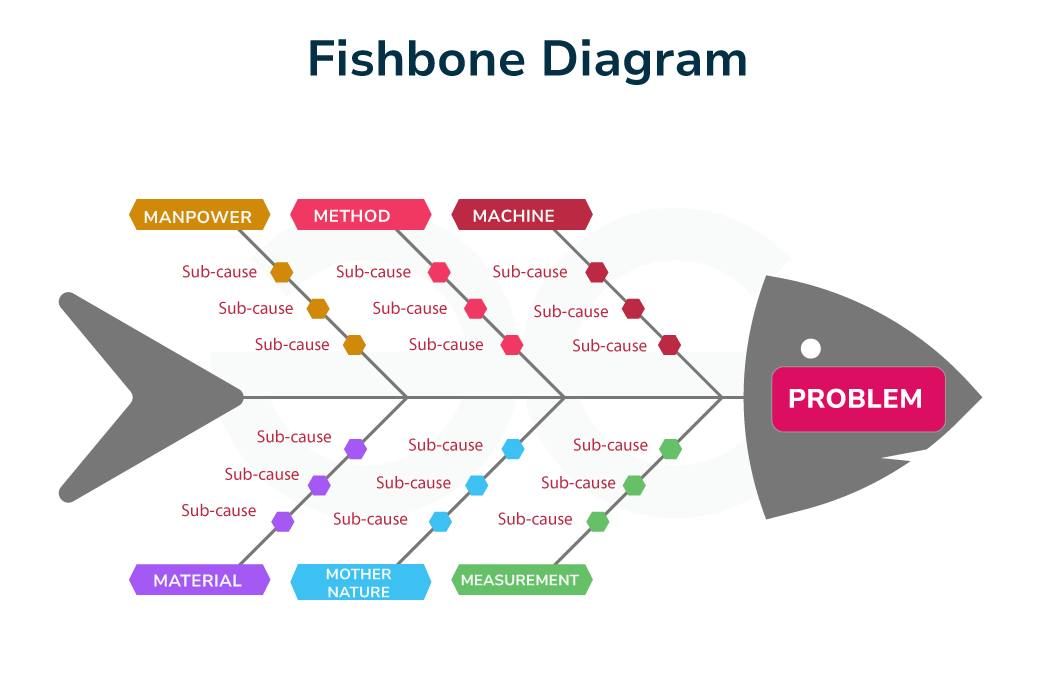
A Fishbone Diagram is a visual problem-solving tool that helps you identify all possible causes of a specific problem in an organized way.

It gets its name because it looks exactly like the skeleton of a fish:

  • The fish head → Your problem
  • The bones branching out → Different categories of possible causes

Instead of randomly guessing what went wrong, the Fishbone Diagram structures your thinking. It forces you and your team to look at problems from multiple angles, not just the obvious ones.


Why Indian Businesses Need This Tool

Running a business means dealing with problems every day. Machines break down. Quality drops. Customers complain. Deadlines are missed.

Most business owners make quick assumptions: “The staff is lazy.” “The machine is old.” “The supplier sent bad material.”

But what if the real reason is something completely different? A missing process, unclear instructions, or a measurement error nobody noticed?

The Fishbone Diagram helps you pause, gather your team, and ask better questions before jumping to conclusions.

It ensures you don’t waste time fixing the wrong thing.


How It Works – The Six Main Categories

When using a Fishbone Diagram, most businesses organize possible causes into six categories (the 6Ms):

1. Manpower (People) – Lack of training, staff shortage, unclear responsibilities

2. Machines (Equipment) – Poor maintenance, improper calibration, old equipment

3. Methods (Processes) – No standard procedure, steps skipped, inconsistent practices

4. Materials (Raw Materials) – Poor quality from suppliers, wrong specifications, storage issues

5. Measurement (Quality Control) – No inspection checklist, faulty instruments, data not recorded

6. Environment (Working Conditions) – Temperature/humidity issues, poor lighting, unsafe workspace

This structure ensures you don’t miss anything important.


A Real Example from an Indian Factory

A ceramic tile manufacturer faced high rejection rates due to surface cracks. The quality manager blamed the workers.

Instead of punishing staff, they created a Fishbone Diagram and brainstormed:

  1. People: Workers not trained on crack detection
  2. Machines: Kiln temperature fluctuating
  3. Methods: No standard cooling time
  4. Materials: New supplier’s glaze formula different
  5. Measurement: No temperature monitoring during firing
  6. Environment: Factory temperature too high in summer

Actions Taken:

  • Installed temperature sensors
  • Standardized cooling time
  • Tested glaze formula properly
  • Added mid-process quality checks

Result: Rejection rate dropped from 12% to under 3% in two months.

They stopped guessing and used the Fishbone Diagram to see the full picture.


When Should You Use It?

The Fishbone Diagram is especially powerful when:

  • Problems keep repeating despite quick fixes
  • Multiple people have different opinions about the cause
  • You need team involvement and brainstorming
  • The issue seems complex with no obvious answer
  • Audit findings or customer complaints are rising

It works best during team meetings where everyone can contribute openly.


Common Mistakes That Reduce Its Power

  • Listing causes without checking facts — Verify with evidence, not just opinions
  • Blaming people instead of systems — Focus on process gaps
  • Skipping certain categories — Consider all six, even if some seem unlikely
  • Creating it alone — This tool works best with team input
  • Not following up with action — The diagram is useless if nothing changes

What You Gain

When done properly, a Fishbone Diagram session delivers:

  • Organized thinking instead of random guessing
  • Better teamwork because everyone contributes
  • Faster problem-solving focused on real causes
  • Stronger systems based on evidence
  • Reduced repeated issues because root causes get fixed

Final Thought

Problems are part of business. But repeatedly fixing the same problem is a choice — and an expensive one.

The Fishbone Diagram gives you a simple, visual way to pause, think clearly, and investigate properly before taking action.

Start using it in your next quality meeting. Pick one recurring problem, gather your team, draw the fish, and see what you discover.

You might be surprised how many possible causes were hiding in plain sight.


Image Credits: Geeks for Geeks

For more articles on startup growth, fundraising strategies, and business insights for Indian founders, 
visit: Udyamee India Magazine

Share. Facebook Twitter Pinterest Bluesky Threads Tumblr Telegram Email
Udyamee India
Udyamee India

Related Posts

Just-in-Time (JIT): The Smart Inventory Strategy That Reduces Waste and Increases Profit

February 20, 2026

Six Thinking Hats: The Powerful Thinking Method That Transforms Business Decision-Making

February 19, 2026

Five Whys Analysis: The Proven Secret That Finally Stops Your Business Problems for Good

February 17, 2026
HIghlights

India 5000 Conference 2025

A Historic, Inspiring, and Power-Packed Celebration of India’s Achievers

Strategic Leadership

5 Reasons Why Department Leaders Are Failing

Gen-Z Stare Revolution

5 Bold Strategies to Transform Your Team

Franchise Ownership

Powerful Strategies to Succeed in a Competitive Market

Stay In Touch
  • Facebook
  • LinkedIn
  • YouTube
  • Instagram
Main Categories
  • Growth
  • Innovation
  • Startups
  • Finance
  • Events
  • Spotlight
  • HR & People
  • Udyamee Initiative
Udyamee Initiative
  • Udyamee Business Council
  • Udyamee Awards
Growth
  • Leadership
  • Marketing
  • Operations
  • Sales
  • Strategy
Innovation
  • Tech
  • Automation
  • Digital tools
Startups
  • Funding
  • Branding
  • Success stories
Finance
  • Money
  • Investors
  • Tax
  • Planning
Events
  • Awards
  • Summits
  • Networking
Spotlight
  • Featured founder
  • Influencer
  • Brand
HR & People
  • Hiring
  • Culture
  • Productivity
  • Workplace
Facebook Instagram LinkedIn
  • Growth
  • Innovation
  • Startups
  • Finance
  • Events
  • Spotlight
  • HR & People
  • Udyamee Initiative
© 2026 Udyamee. Made with ❤️ by PrimeWebx.com

Type above and press Enter to search. Press Esc to cancel.

Ad Blocker Enabled!
Ad Blocker Enabled!
Our website is made possible by displaying online advertisements to our visitors. Please support us by disabling your Ad Blocker.

Website security powered by MilesWeb