

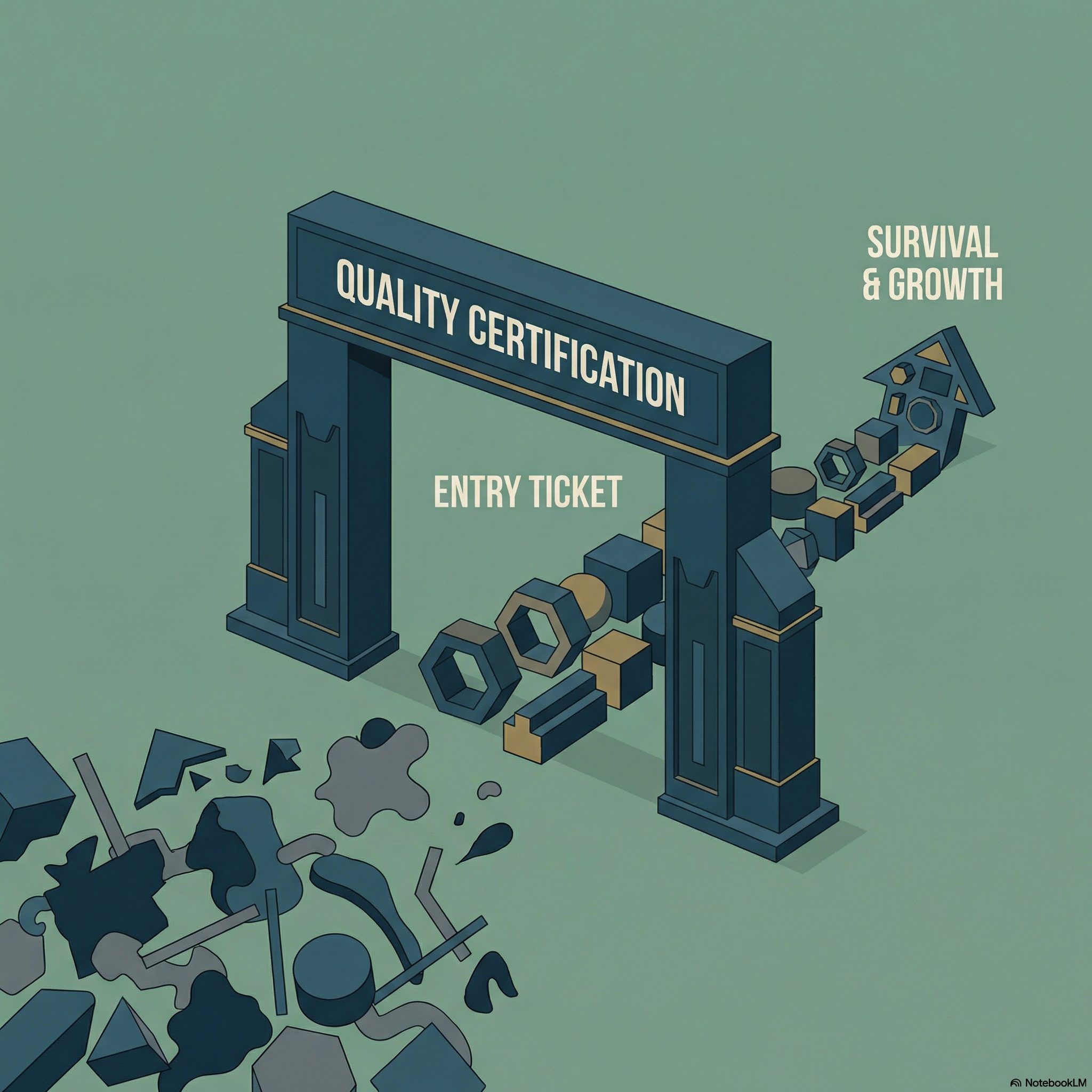
Business-defining truths about quality standards, why certification is no longer optional, but the entry ticket to survival and growth.
Introduction
Quality Certification Reality has changed completely in the last decade.
There was a time when quality was a selling point.
Today, quality is the entry ticket.
In Indian manufacturing, many businesses still believe certifications are only for large companies or export-focused units. That belief is outdated. Buyers, regulators, and partners now expect structured quality systems.
This is the new Quality Certification Reality: either you align with standards, or you slowly get pushed out of the market.
Buyers Don’t “Trust”, They Verify
Earlier, relationships mattered most. A handshake and a reference could close deals.
Today, buyers want documentation. Processes. Audits. Proof.
Large clients, OEMs, and even mid-sized companies look for Quality Certification because it reduces their risk. They don’t want surprises after placing orders.
No certification doesn’t mean bad quality. But it does mean higher perceived risk.
And in business, perception decides opportunity.
Quality Certification Separates Serious Businesses from Temporary Ones
Manufacturing markets are crowded. Many players offer similar pricing and capacity.
What separates stable businesses from short-term operators is system maturity. Quality Certification signals discipline, consistency, and long-term intent.
It shows that the business can:
- Follow processes
- Control quality
- Manage documentation
- Handle audits
This is why certifications are increasingly used as a filtering tool, not just a quality check.
Growth Without Quality Certification Hits a Ceiling
Many manufacturing units grow well until a certain point. Then suddenly, opportunities slow down.
Big tenders require certification. Export markets demand certification. Corporate clients mandate certification.
Without Quality Certification, growth hits an invisible wall.
Owners often realize this late, when competitors with systems move ahead while they struggle to qualify.
Certification does not create growth. But lack of certification definitely blocks it.
Quality Certification Reduces Internal Chaos
One misunderstood aspect of Quality Certification is its internal impact.
Certification forces businesses to:
- Define roles
- Standardize processes
- Reduce dependency on individuals
- Document critical activities
This reduces daily firefighting.
When processes are clear, fewer mistakes happen. Rework reduces. Customer complaints reduce. Employees know what is expected.
Quality systems are not paperwork exercises. They are operational stabilizers.
Compliance Pressure Is Only Increasing
Regulatory scrutiny in India is rising. Labour norms, safety standards, environmental rules, and traceability requirements are becoming stricter.
While Quality Certification does not replace legal compliance, it makes compliance easier to manage.
Businesses with systems adapt faster. Those without struggle, panic, and react late.
In future, lack of certification will not just reduce opportunities—it will increase operational risk.
Quality Certification Builds Second-Line Capability
Many manufacturing businesses depend heavily on the founder’s presence.
Quality systems distribute knowledge. Processes don’t sit in one person’s head. This enables delegation and leadership development.
With Quality Certification, businesses become less personality-driven and more process-driven.
This is essential for scale, succession, and long-term stability.
Certification Is a Signal to Employees and Partners
Good talent prefers stable organizations. Vendors prefer reliable partners. Banks prefer structured borrowers.
Quality Certification sends a clear signal that the business is serious, organized, and future-oriented.
This improves trust across the ecosystem, not just with customers.
Conclusion
Quality is no longer a choice. It is a survival requirement.
Manufacturing businesses that ignore Quality Certification may continue for some time, but they will face shrinking opportunities, increasing pressure, and rising risk.
Certification does not make a business perfect. But it makes a business visible, credible, and scalable.
In today’s manufacturing environment, standards don’t just measure quality. They decide who stays in the game.
Image credits: Created with NotebookLM
For more articles on startup growth, fundraising strategies, and business insights for Indian founders,
visit: Udyamee India Magazine