

Powerful signs that show when you’ve become the biggest obstacle to your own business, and how to break free.
What Founder Bottleneck Really Means
In the early days of a business, the founder does everything. Sales, operations, customer follow-ups, hiring, payments, and sometimes even delivery. This phase is necessary.
The problem begins when the business grows, but the founder stays stuck doing everything.
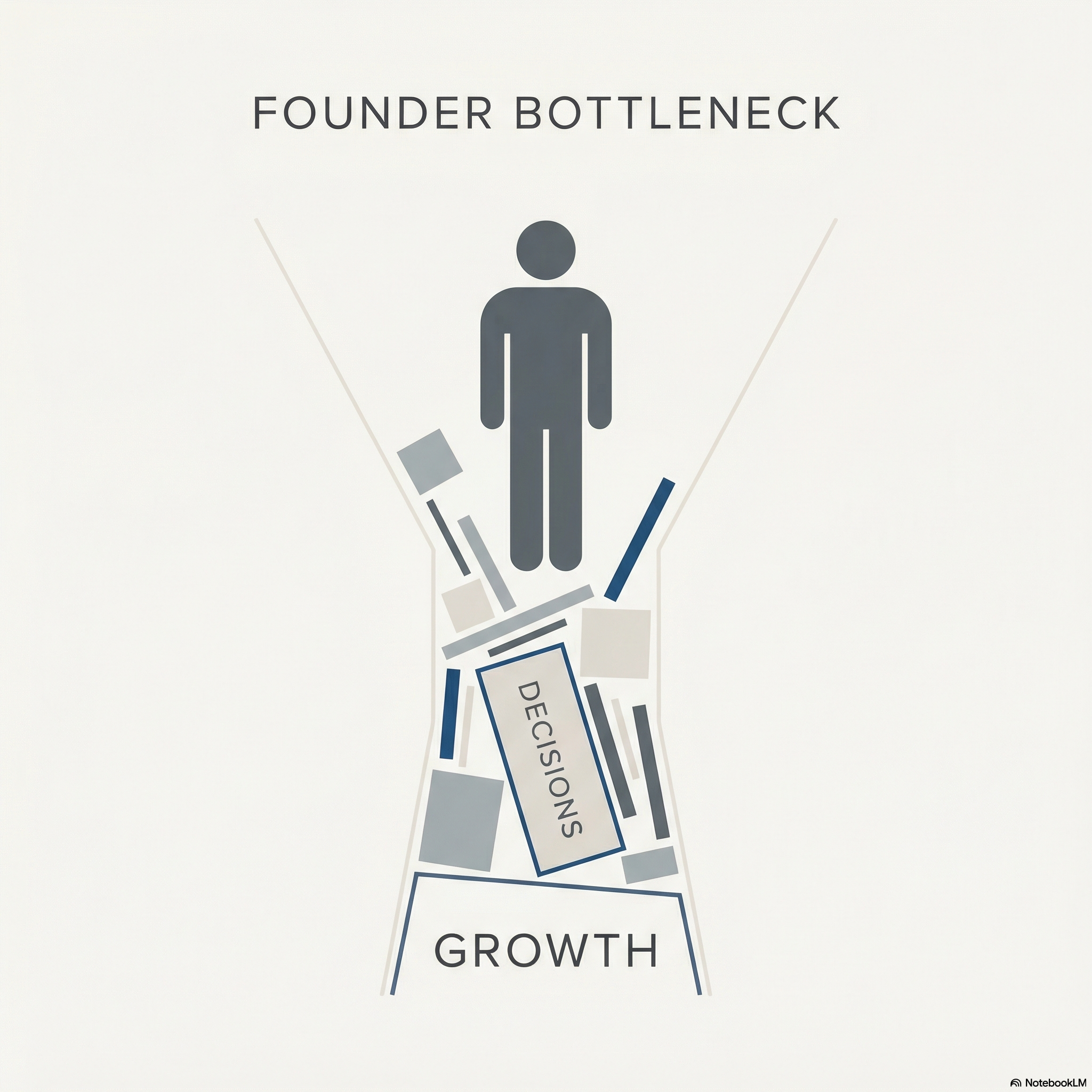
This situation is known as a Founder Bottleneck. It happens when the business depends too much on one person for decisions, approvals, and problem-solving. Growth slows down, teams feel helpless, and the founder feels exhausted.
Many Indian MSMEs face this issue but don’t realize it until it starts hurting revenue and peace of mind.
Every Decision Comes to You
One clear sign of a Founder Bottleneck is when every small or big decision needs your approval. Your team waits. Work pauses. Customers feel delays.
At first, this feels like control. In reality, it becomes congestion.
When one person decides everything, the business speed matches only that person’s availability.
You’re Always Busy, But Growth Is Slow
Being busy is not the same as growing.
Many founders work 12–14 hours a day and still feel the business is stuck. This is a classic Founder Bottleneck sign. You’re handling tasks that others could do, instead of focusing on direction, systems, and long-term plans.
If the business cannot move when you take a day off, it’s not scaling. It’s surviving.
No Clear Systems, Only “Ask the Founder”
In businesses with a Founder Bottleneck, most processes live inside the founder’s head. Employees often say, “Let’s ask the founder” instead of checking a system.
There are no written processes, clear roles, or decision limits. This creates confusion, mistakes, and fear of taking responsibility.
Without systems, people depend on you. And dependency blocks growth.
Firefighting Becomes Daily Work
Founders caught in a Founder Bottleneck spend most of their time fixing urgent issues. Vendor problems. Customer complaints. Internal confusion.
Firefighting feels productive, but it’s reactive work. Leadership work is proactive.
When founders don’t step out of daily firefighting, they never get time to build a stronger structure.
Over time, this leads to burnout and frustration.
Team Members Do Not Grow
When a Founder Bottleneck exists, employees stop thinking independently. They wait for instructions. They avoid decisions. Middle managers never develop leadership skills.
This is not because the team is weak. It’s because authority is never shared.
A business grows only when people grow. And people grow only when they’re trusted with responsibility.
Expansion Feels Risky and Stressful
Many founders delay expansion because they fear losing control. New locations, new clients, or new services feel dangerous when everything depends on the founder.
This fear is another sign of a Founder Bottleneck. The business is not ready to grow because it’s not system-driven.
When systems are strong, growth feels planned. When systems are weak, growth feels scary.
You Feel Trapped in Your Own Business
The most painful sign of a Founder Bottleneck is emotional. You feel trapped.
You started the business for freedom, but now you cannot step away. Vacations feel stressful. Even weekends bring phone calls and decisions.
This is not success. This is dependence.
How to Break the Founder Bottleneck
Breaking a Founder Bottleneck doesn’t mean leaving the business. It means changing your role.
Start with small steps:
- Write simple SOPs for key tasks
- Clearly define who can decide what
- Train one second-level leader at a time
- Allow mistakes and guide, not control
Leadership is not about doing everything right. It’s about making the business work without your constant presence.
From Operator to Leader
In the beginning, founders must operate. Later, they must lead.
A business that depends fully on the founder cannot scale. A business that is led by the founder but run by systems can grow sustainably.
The Founder Bottleneck is common, but it’s not permanent. The moment a founder chooses systems over control, the business starts moving again.
Growth doesn’t require more effort. It requires a different role.
Image credits: Created with NotebookLM
For more articles on startup growth, fundraising strategies, and business insights for Indian founders,
visit: Udyamee India Magazine