

Close Menu
udyamee
  • Home
  • Growth
    • Strategy
    • Leadership
    • Marketing
    • Operations
    • Sales
  • Innovation
    • Tech
    • AI
    • Automation
    • Digital tools
  • Startups
    • Funding
    • Planning
    • Branding
    • Success stories
  • Finance
    • Money
    • Investors
    • Tax
    • Planning
  • Events
    • Awards
    • Summits
    • Networking
  • Spotlight
    • Featured founder
    • Influencer
    • Brand
  • HR & People
    • Hiring
    • Culture
    • Productivity
    • Workplace
  • Udyamee Initiative
    • Udyamee Business Council
    • Udyamee Awards
  • My Account
What's Hot

Just-in-Time (JIT): The Smart Inventory Strategy That Reduces Waste and Increases Profit

February 20, 2026

Six Thinking Hats: The Powerful Thinking Method That Transforms Business Decision-Making

February 19, 2026

Fishbone Diagram: Stop Guessing and Finally See What’s Really Causing Your Problems

February 18, 2026
Facebook X (Twitter) Instagram Threads
Trending
  • Just-in-Time (JIT): The Smart Inventory Strategy That Reduces Waste and Increases Profit
  • Six Thinking Hats: The Powerful Thinking Method That Transforms Business Decision-Making
  • Fishbone Diagram: Stop Guessing and Finally See What’s Really Causing Your Problems
  • Five Whys Analysis: The Proven Secret That Finally Stops Your Business Problems for Good
  • Root Cause Solutions: Stop Wasting Time on Problems That Keep Coming Back
  • FMEA: The Risk Tool That Stops Problems Before They Cost You Money
  • Process Clarity Unlocked: The Simple Tool That Transforms How Your Business Works
  • Kaizen: Small Steps, Big Results, how Continuous Improvement Transforms Your Business
udyamee
My Account
  • Home
  • Growth
    • Strategy
    • Leadership
    • Marketing
    • Operations
    • Sales
  • Innovation
    • Tech
    • AI
    • Automation
    • Digital tools
  • Startups
    • Funding
    • Branding
    • Success stories
  • Finance
    • Money
    • Investors
    • Tax
    • Planning
  • Events
    • Awards
    • Summits
    • Networking
  • Spotlight
    • Featured founder
    • Influencer
    • Brand
  • HR & People
    • Hiring
    • Productivity
    • Workplace
  • Udyamee Initiative
    • Udyamee Business Council
    • Udyamee Awards
udyamee
Home»Innovation»Automation»Quick Commerce India: 12 Powerful Changes Reshaping Modern Retail
Automation

Quick Commerce India: 12 Powerful Changes Reshaping Modern Retail

Udyamee IndiaBy Udyamee IndiaDecember 19, 2025Updated:December 19, 20254 Mins Read
Quick Commerce India
Share
Facebook Twitter Pinterest Copy Link LinkedIn WhatsApp

In mid-2024, the Indian retail world shifted sharply. Flipkart’s announcement to double its dark store network for Flipkart Minutes from 400 to 800 by the end of 2025 sent a clear signal: speed has become the new currency. For a country accustomed to 2–7 day delivery cycles, receiving essentials in 10–30 minutes marked a fundamental change. Quick Commerce India is no longer experimental. It is now a serious retail format.


1. What Quick Commerce India Really Means

Quick Commerce India refers to delivering products within 10–30 minutes from nearby dark stores or micro-warehouses located close to residential areas. Instead of city-wide fulfillment centers, this model serves compact 2–3 km zones with high-speed logistics.

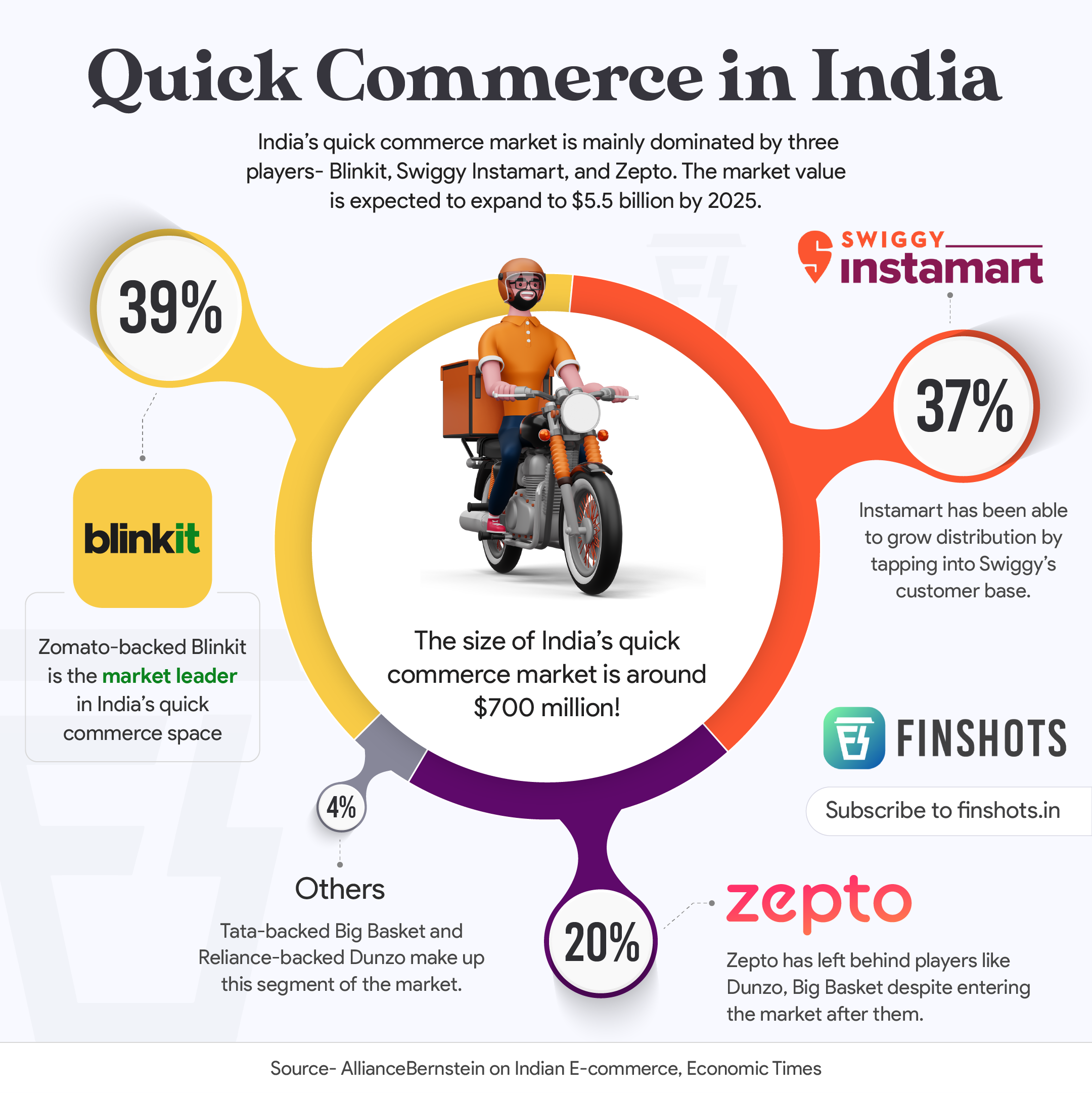
The idea grew naturally from India’s food delivery habits. Platforms like Blinkit, Zepto, Swiggy Instamart, and Flipkart Minutes began competing to capture urgent consumer needs rather than planned purchases.


2. Traditional E-Commerce: India’s Retail Backbone

Before Quick Commerce India emerged, traditional e-commerce shaped India’s online shopping culture. Platforms such as Flipkart, Amazon, and Meesho offered:

  • Huge selection with millions of products
  • Affordable prices because of scale
  • Delivery to more than 20,000 pin codes
  • Trust built through long-term consistency

This model depends on large fulfillment centers and optimized supply chains, prioritizing reach, price, and variety over speed.


3. How Quick Commerce India Changed Retail Priorities

Quick commerce rewrote the rules:

  • Speed over variety: 2,000–3,000 essential items only
  • Convenience over savings: Customers willingly pay extra
  • Hyperlocal reach: High-density urban zones first
  • Owned inventory: Better control over quality and availability

Dark stores operate with heavy AI support to predict demand, stock fast-moving items, and reduce wastage.


4. Where Quick Commerce India Wins

Instant delivery works best in specific scenarios:

  • Emergency needs: diapers, medicine strips, missing ingredients
  • Impulse buys: ice cream, snacks, beverages
  • Quick replacements: broken chargers, used-up toiletries
  • Convenience premium: saving days of waiting

The decision is emotional and time-driven, not price-driven.


5. Where Traditional E-Commerce Still Dominates

Despite its speed, Quick Commerce India cannot replace traditional platforms:

  • Large-value items like appliances and electronics
  • Bulk or monthly grocery shopping
  • Niche and uncommon products
  • Users in smaller towns and rural areas
  • Highly price-sensitive buyers

Traditional e-commerce continues to lead where planning, selection, and affordability matter more.


6. Economics: Why Both Models Are Challenging

The business economics of the two models are very different.

Traditional e-commerce:

  • Lower delivery cost per product
  • Higher customer acquisition cost
  • Better inventory efficiency
  • Marketplace flexibility

Quick Commerce India:

  • High delivery cost (₹50–₹100 per order)
  • Lower acquisition cost due to repeat usage
  • Higher inventory and wastage risk
  • Dark store rent and staffing expenses

High demand does not automatically mean high profits.


7. Technology and Infrastructure Pressure

Quick Commerce India requires advanced systems:

  • Real-time inventory tracking
  • Hyperlocal demand forecasting
  • Minute-level delivery routing
  • AI-driven store placement

Managing hundreds of dark stores is technically more complex than operating fewer large warehouses.


8. The Hybrid Retail Future

Indian consumers now switch models based on situation, not loyalty. Speed matters sometimes. Savings matter at other times. Retailers are responding with hybrid strategies that combine both formats.

By 2030, India is likely to see:

  • Coexistence of quick commerce and traditional e-commerce
  • Large players winning through hybrid models
  • Quick commerce focused mainly on groceries and daily essentials

Quick Commerce India will not replace traditional e-commerce. It will complement it.


Conclusion

Quick Commerce India and traditional e-commerce serve different consumer moments. One satisfies urgency, the other delivers value and variety. Indian retailers must master both because customer expectations are now flexible and situational. Understanding when speed matters and when planning matters will define the next phase of India’s retail evolution.


Image Credits: Finshots / DigitalPRworld.com

 For more articles on startup growth, fundraising strategies, and business insights for Indian founders, visit: Udyamee India Magazine
Quick Commerce India

Share. Facebook Twitter Pinterest Bluesky Threads Tumblr Telegram Email
Udyamee India
Udyamee India

Related Posts

Why Most Businesses Fail at Automation Before They Even Start

January 27, 2026

How Paytm’s 16-Year Journey Transformed Digital Payments in India

December 18, 2025

Businesses Win Big: 10 Powerful AI Tools Transforming Small Enterprises in 2025

April 12, 2025
HIghlights

India 5000 Conference 2025

A Historic, Inspiring, and Power-Packed Celebration of India’s Achievers

Strategic Leadership

5 Reasons Why Department Leaders Are Failing

Gen-Z Stare Revolution

5 Bold Strategies to Transform Your Team

Franchise Ownership

Powerful Strategies to Succeed in a Competitive Market

Stay In Touch
  • Facebook
  • LinkedIn
  • YouTube
  • Instagram
Main Categories
  • Growth
  • Innovation
  • Startups
  • Finance
  • Events
  • Spotlight
  • HR & People
  • Udyamee Initiative
Udyamee Initiative
  • Udyamee Business Council
  • Udyamee Awards
Growth
  • Leadership
  • Marketing
  • Operations
  • Sales
  • Strategy
Innovation
  • Tech
  • Automation
  • Digital tools
Startups
  • Funding
  • Branding
  • Success stories
Finance
  • Money
  • Investors
  • Tax
  • Planning
Events
  • Awards
  • Summits
  • Networking
Spotlight
  • Featured founder
  • Influencer
  • Brand
HR & People
  • Hiring
  • Culture
  • Productivity
  • Workplace
Facebook Instagram LinkedIn
  • Growth
  • Innovation
  • Startups
  • Finance
  • Events
  • Spotlight
  • HR & People
  • Udyamee Initiative
© 2026 Udyamee. Made with ❤️ by PrimeWebx.com

Type above and press Enter to search. Press Esc to cancel.

Ad Blocker Enabled!
Ad Blocker Enabled!
Our website is made possible by displaying online advertisements to our visitors. Please support us by disabling your Ad Blocker.

Website security powered by MilesWeb