

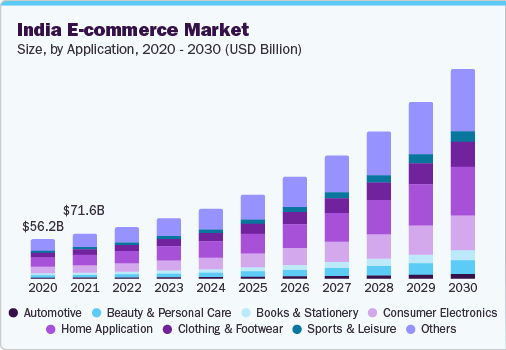
India’s digital marketplace is entering its most defining decade. The India ECommerce Growth story is projected to reach $163 billion (about ₹13.6 lakh crore) by 2026. This is not only a rise in online shopping, it is a large economic shift changing how Indians buy, work, earn, and build businesses. For Indian business owners, understanding this change matters more today than ever.
Below is an India-specific, easy-to-read breakdown of the 8 major trends shaping the India ECommerce Growth trajectory.
1. A Fast-Growing Digital Consumer Base
India has one of the world’s largest internet populations. By 2028, India will cross 1.2 billion internet users. Cheap smartphones, wide 4G coverage, and the expanding 5G rollout mean every year, millions of new consumers join the digital economy. This pushes India ECommerce Growth deeper into Tier-2 and Tier-3 markets.
Rural connectivity through BharatNet and improving digital literacy are opening new business opportunities that did not exist a few years ago.
2. Digital Payments Becoming a National Habit
UPI has changed India forever. With over 130 billion transactions in 2024 alone, payment friction has disappeared from daily life. From tea stalls to large enterprises, everyone uses digital payments.
This frictionless system plays a huge role in India ECommerce Growth, as people now trust online transactions, refunds, and COD alternatives. Faster payments mean more orders, more repeat customers, and more confidence in digital buying.
3. A Strong Logistics Backbone Supporting the Boom
India’s supply chain has improved dramatically in the last five years. Today, reliable delivery reaches more than 95% of pin codes. Private logistics companies, startup innovations, and hyper-local delivery models have transformed how goods move.
Key developments powering India ECommerce Growth include:
• Expansion of warehouses across small towns
• Faster delivery cycles
• Reverse logistics improvements for easy returns
• Better cold-chain movement for groceries and medicines
This backbone makes e-commerce reliable for both buyers and sellers.
4. Tier-2 and Tier-3 Cities Leading the Next Wave
Smaller cities are no longer “future markets.” They are the engine of India ECommerce Growth right now. Over half of all new online shoppers come from these regions.
Why Tier-2/3 domination matters:
• Young population
• Higher trust in digital platforms
• Faster adoption of fashion, electronics, and FMCG online
• Growing aspirations
• Better connectivity and delivery networks
This shift means new Indian brands must think beyond metros if they want to grow.
5. Category Expansion Unlocking New Market Value
E-commerce in India is no longer about clothes and phones. New categories are scaling fast and contributing to India ECommerce Growth.
Key segments growing in India:
• Fashion & Apparel: Largest category due to high repeat buying
• Electronics: Stable growth driven by affordability and EMI options
• Grocery & FMCG: Fastest-growing because of quick commerce
• Beauty & Wellness: Boosted by influencers and online education
• Furniture & Home: Rising as logistics improve
• Automotive Parts & Accessories: Strong future potential
As more categories go online, the overall market size expands without limit.
6. A Strong Startup & Investment Ecosystem
India is now one of the world’s most watched digital markets. From 2020 to 2025, more than $50 billion has been invested into e-commerce and related sectors.
Investment flows include:
• Venture Capital for early-stage innovation
• Private Equity for late-stage platforms
• Strategic investments by global giants
• Public markets through IPOs
• Debt funding for profitable players
This steady flow of capital ensures India ECommerce Growth remains strong even during global slowdowns.
7. Technology Innovation Shaping the Future
Technology is not just supporting Indian e-commerce, it is redefining it. As the India ECommerce Growth story accelerates, companies are investing in:
• AI for personalized recommendations
• Machine learning for better inventory and pricing
• AR/VR for virtual try-ons
• Blockchain for transparency and trust
• IoT devices for automated purchases
• Cloud and data centers to handle scale
These innovations will decide which companies survive and which fade away.
8. Employment and Entrepreneurship Expanding Nationwide
India ECommerce Growth is not only about revenue; it is also about jobs and business opportunities.
Direct jobs:
Delivery staff, warehouse teams, technology roles, customer support.
Indirect jobs:
Sellers, small manufacturers, packaging companies, logistics partners, influencers, and service providers.
By 2026, e-commerce will support more than 30 million livelihoods in India.
For entrepreneurs, this ecosystem creates new opportunities:
• Launching D2C brands
• Creating digital-first regional brands
• Building logistics tech solutions
• Providing seller services
• Becoming part of ONDC networks
• Offering content, videos, and product education
E-commerce has become a foundation for modern Indian entrepreneurship.
Conclusion: India’s Digital Commerce Story Is Just Beginning
India ECommerce Growth will touch $163 billion by 2026, but this is still the early stage of a much larger transformation. From rural sellers joining digital platforms to small manufacturers reaching national markets, India is rewriting how business works.
For business owners and leaders, this is a decisive moment. The digital economy is not waiting. Those who act now will shape their industries for the next decade. Those who delay will struggle to catch up.
India’s digital journey is moving fast, and the window of opportunity is open right now.
Image Credits: GVR- Grand View Research
For more articles on startup growth, fundraising strategies, and business insights for Indian founders, visit: Udyamee India Magazine