

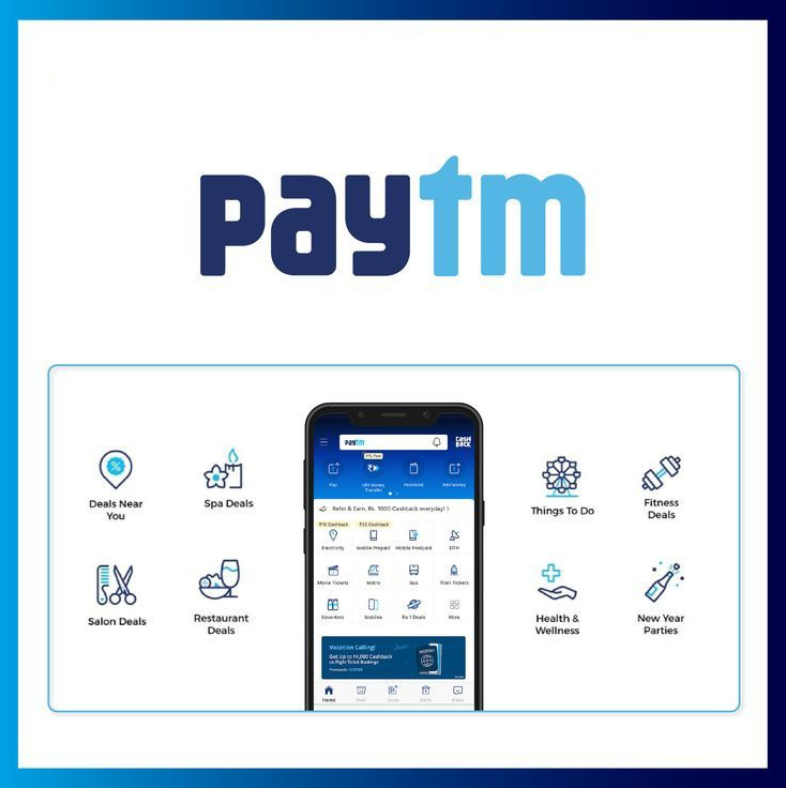
When Vijay Shekhar Sharma started One97 Communications in 2001, very few believed it would go on to redefine Digital Payments in India. What began as a modest technology venture slowly evolved into Paytm, a platform that now processes millions of transactions daily and plays a central role in India’s fintech ecosystem.
Paytm’s story is not just about one company’s growth. It reflects how technology, timing, and trust combined to reshape how Indians transact.
From Mobile Recharges to a National Habit
Paytm entered the consumer market in 2010 as a simple mobile recharge website. At a time when most transactions were cash-based, this convenience-first approach gained quick traction. The service may have been basic, but it laid the groundwork for the wider adoption of Digital Payments in India.
The real inflection point came in November 2016, during demonetisation. With cash suddenly scarce, Paytm became a lifeline for consumers and merchants alike. Usage surged overnight, accelerating Digital Payments in India from an alternative option to a daily necessity. “Paytm Karo” became part of everyday language.
Making Payments Work for Real India
India’s challenges were unique: low-end smartphones, unreliable internet, and deep-rooted cash habits. Paytm addressed this by introducing QR code payments that worked even in the smallest kirana stores. This simplicity brought Digital Payments in India to street vendors, autorickshaw drivers, and local markets.
In 2017, Paytm Payments Bank expanded this access further by enabling savings, bill payments, and digital transactions under one roof. Over 100 million users are now KYC-verified wallet holders, reflecting growing trust in app-based financial services.
UPI and the Next Leap Forward
As India’s Unified Payments Interface gained momentum, Paytm integrated UPI to simplify bank-to-bank transfers. This move strengthened Digital Payments in India by reducing friction and improving interoperability across platforms.
UPI Lite and small-ticket payment features further lowered entry barriers. By August 2023, Paytm had recorded over 50 million UPI Lite transactions, reinforcing its role in mainstreaming Digital Payments in India across demographics.
More Than a Payment App
Paytm gradually evolved into a full digital ecosystem, reinforcing Digital Payments in India through multiple services:
- E-commerce: Access to over 80 product categories
- Financial Services: Mutual funds, insurance, gold, and personal loans
- Bill Payments & Travel: Utilities, recharges, and bookings in one app
- Merchant Services: Advertising and payment solutions for businesses
This diversification ensured that users stayed within the platform for most financial needs.
Scale, Revenue, and Reach
In FY25, Paytm reported revenues of ₹76,249 crore ($8.82 billion). Loan disbursals grew by 253 percent in 2023, helping individuals and small businesses who lacked traditional banking access. This scale highlights how deeply Digital Payments in India are now embedded in the economy.
With over 10,000 employees and operations spanning urban and rural India, Paytm has become a national financial infrastructure player.
Technology Built for Volume
Paytm’s technology backbone handles hundreds of millions of monthly transactions. Its upgraded payments platform, launched in 2023, processes nearly ten times more transactions than earlier systems. AI-driven fraud detection and personalization ensure reliability even on low bandwidth networks.
This resilience is critical for sustaining Digital Payments in India at population scale.
Impact Beyond Business
The rise of Paytm has reshaped society in meaningful ways. Financial inclusion expanded as unbanked users accessed formal services. Small merchants gained digital tools once reserved for large enterprises. Government collections became more transparent, strengthening trust in Digital Payments in India as a public good.
Challenges and Competition
Despite its scale, Paytm operates in a highly competitive market alongside Google Pay, PhonePe, and bank-led apps. Regulatory compliance, data privacy norms, and profitability pressures remain ongoing challenges.
Yet these pressures also push innovation, improving the overall quality of Digital Payments in India.
Looking Ahead
As India moves toward a less-cash economy, Paytm is preparing for the next phase. Initiatives around CBDC, advanced UPI features, and deeper penetration into Tier 2 and Tier 3 towns will shape the future of Digital Payments in India.
Conclusion
From prepaid recharges to a full-stack financial platform, Paytm’s journey mirrors India’s digital transformation. By simplifying access, scaling trust, and investing in technology, Paytm has permanently reshaped Digital Payments in India. As the nation advances toward a $5 trillion economy, Paytm stands firmly as one of the pillars supporting that future.
Image Credits: Pinterest
For more articles on startup growth, fundraising strategies, and business insights for Indian founders, visit: Udyamee India Magazine